Zendesk vs. Freshdesk
The Zendesk Resolution Platform is our powerful AI-first service solution that combines ease of use and fast implementation to give customers value from day one. In comparison, Freshdesk claims to be easy to use, but lacks AI maturity and fails to scale beyond the basics.
Last updated April 10, 2026
Why companies are switching from Freshdesk to Zendesk
Choosing the right service platform shouldn't feel like a compromise between ‘easy to start’ and ‘impossible to scale.’ While Freshdesk can be fast to deploy, companies quickly find themselves hitting a performance ceiling, leading to fragmented data, context-switching that creates fatigue for agents, and compromised service quality for customers.
Zendesk is fundamentally different. Our platform was purpose-built for service with a focus on delivering an easy-to-use solution that scales as needs evolve. With 19 years of service history and 100,000+ customers worldwide, our AI, analytics, and automation provide a strong foundation equipped with enterprise-grade power and intuitive simplicity.
The Zendesk Resolution Platform is built with core service must-haves:
- Trusted: A secure and reliable foundation you’ll never outgrow
- Precise: Data informs decisive actions
- Guided: AI that takes action and works from day one
- Unified: One cohesive, seamlessly integrated platform for all channels
1. Trusted: A secure and reliable foundation you’ll never outgrow
Companies of all sizes trust Zendesk to deliver fast time to value without sacrificing ease of use and scaling power. From day one, you get enterprise-grade security and flexible admin controls to keep your operations running smoothly, whether you have a team of five or five hundred.
Freshdesk was built for simple use cases. As businesses scale, they consistently run into challenges like performance bottlenecks and governance gaps that complex support operations demand. This becomes a risky long-term bet for companies who want a platform that supports evolving needs and performance stability.
With Zendesk, you don't have to choose between simple and powerful. You get both, backed by a platform that businesses trust to scale.
2. Precise: Data informs decisive actions
Good decisions start with the right data. Zendesk is purpose-built for service, giving teams the precision to act on what matters. So, not just what happened, but why it happened and what to do next.
With Zendesk's AI-powered automation routing and granular, real-time reporting, teams get a clear picture of performance, trends, and resolution patterns. No guesswork, no blind spots. Freshdesk analytics are surface-level, often leaving teams to piece together answers with expensive third-party tools. Without precise data, it's harder to spot problems early, improve workflows, or make decisions you can stand behind.
With Zendesk, precision is built into every layer, from how tickets are routed to how performance is measured. Your team spends less time searching for answers and more time acting on them.
3. Guided: AI that takes action and works from day one
Zendesk AI is native to the platform and trained on over 18 billion real service interactions to understand intent and sentiment right out of the box. Zendesk AI agents autonomously resolve complex issues, while Agent Copilot gives human agents real-time guidance to work faster and smarter.
Freshworks’ Freddy AI often feels like an add-on rather than a deeply integrated part of the platform. This results in lower accuracy in ticket routing, bot responses, and predictive recommendations compared to Zendesk's purpose-built AI.
With Zendesk, AI isn't an afterthought. It's your guide from the very first interaction.
4. Unified: One cohesive, seamlessly integrated platform for all channels
Customers expect seamless conversations across channels. To meet SLAs, context from every ticket needs to be preserved and routed to the correct agent. Zendesk is built on a single, native platform which unifies all interactions across email, chat, voice, and messaging, so every conversation exists in one continuous thread. No syncing required, because the data never existed in separate silos to begin with.
Freshworks users often experience context-switching fatigue. If an agent needs to move from a chat to a phone call, they are often navigating different apps (Freshchat vs. Freshcaller) or paying for the "Omni" upgrade just to get basic connectivity.
More in this guide:
- Service must-haves: Where Zendesk beats Freshdesk every time
- Zendesk vs. Freshdesk: Features comparison
- Zendesk vs Freshdesk pricing
- Freshdesk customers are moving to Zendesk, and here’s why
- Frequently asked questions
- Zendesk helps teams win
Service must-haves: Where Zendesk beats Freshdesk every time
|
Service must-haves |
Zendesk |
Freshdesk |
|
Trusted |
Workflow automation supports highly complex business rules, triggers, and macros that can be configured for enterprise support operations |
Automation is not truly omnichannel; ticket workflows lack real time visibility into chat or voice events |
|
Advanced SLA management and skills-based routing handle 1,000+ agents with ease |
Limited enterprise routing and overflow controls; poor skills-based routing, SLAs break under load | |
|
Advanced Data Privacy & Protection (ADPP) includes 90-day agent access logs, custom data retention, and automated PII redaction |
Basic Audit Logs provides basic event logs (who changed a status) but lacks granular logs of who viewed specific PII | |
|
Precise |
Advanced analytic reporting allows for customized dashboards, granular KPI tracking, and visualizing data across every channel |
Pre-built reports offer limited customization, making it difficult to tailor and surface relevant insights |
|
Reporting is unified across every support channel into a single analytics view for a true picture of performance |
Reporting is more siloed by channel and product, requiring the need to manually reconcile data across multiple dashboards | |
|
Real-time dashboards provide visibility into queue volumes, agent performance, and SLA adherence |
Real-time reporting capabilities are less robust, with refresh delays and fewer configurable metrics | |
|
Guided |
AI agents handle complex, multi-turn customer conversations, resolving issues without human intervention |
Freddy AI is more scripted and rule-dependent, struggling to manage nuanced or multi-step customer interactions without human intervention |
|
Agent Copilot delivers real-time guidance directly within the workspace, reducing handle times and improving response quality |
Freddy AI provides basic AI-suggested responses but lacks the depth, contextual awareness, and workflow integration | |
|
Purpose-built AI that can understand intent and sentiment out-of-the-box using billions of CX data points |
Freddy AI often functions as a "bolted-on" layer which requires more manual training and decision-tree mapping | |
|
Unified |
Agent Workspace consolidates every customer interaction into a single, unified view |
Omnichannel experience is fragmented, with inconsistent interfaces across channels that force agents to context-switch |
|
Side conversations allow agents to start Slack or email threads directly from a ticket, keeping the audit trail intact |
Disconnected tooling cause users to complain that the experience is not truly unified and feels like tab switching | |
|
Seamless bot-to-human process enables context-preserving handoff from AI Agents to live agents across any channel |
Bot-to-human handoffs often lose conversation context during escalation and create friction that negatively impacts the customer experience |
Zendesk vs. Freshdesk: Features comparison
Global scale and automation
Zendesk is designed to empower organizations as they grow and scale. Zendesk can natively support multiple brands and business units, each with their own workflows, help centers, SLA policies, and reporting structures. These are all managed through a centralized admin model that scales without adding operational overhead. Advanced skills-based routing and multi-condition business logic ensure that the right ticket reaches the right agent at the right time, consistently at any volume.
Freshdesk struggles when businesses require complex, multi-region workflow automations or high-volume ticket handling. Its automation model was designed for simplicity, not scale. What’s more, its logic is divided into three siloed, sequential modules, each operating independently with no shared context.
According to Nucleus Research, organizations migrating from Freshworks to Zendesk see a 15% increase in admin productivity, which is a direct result of centralized workflow governance replacing fragmented, manual configuration.
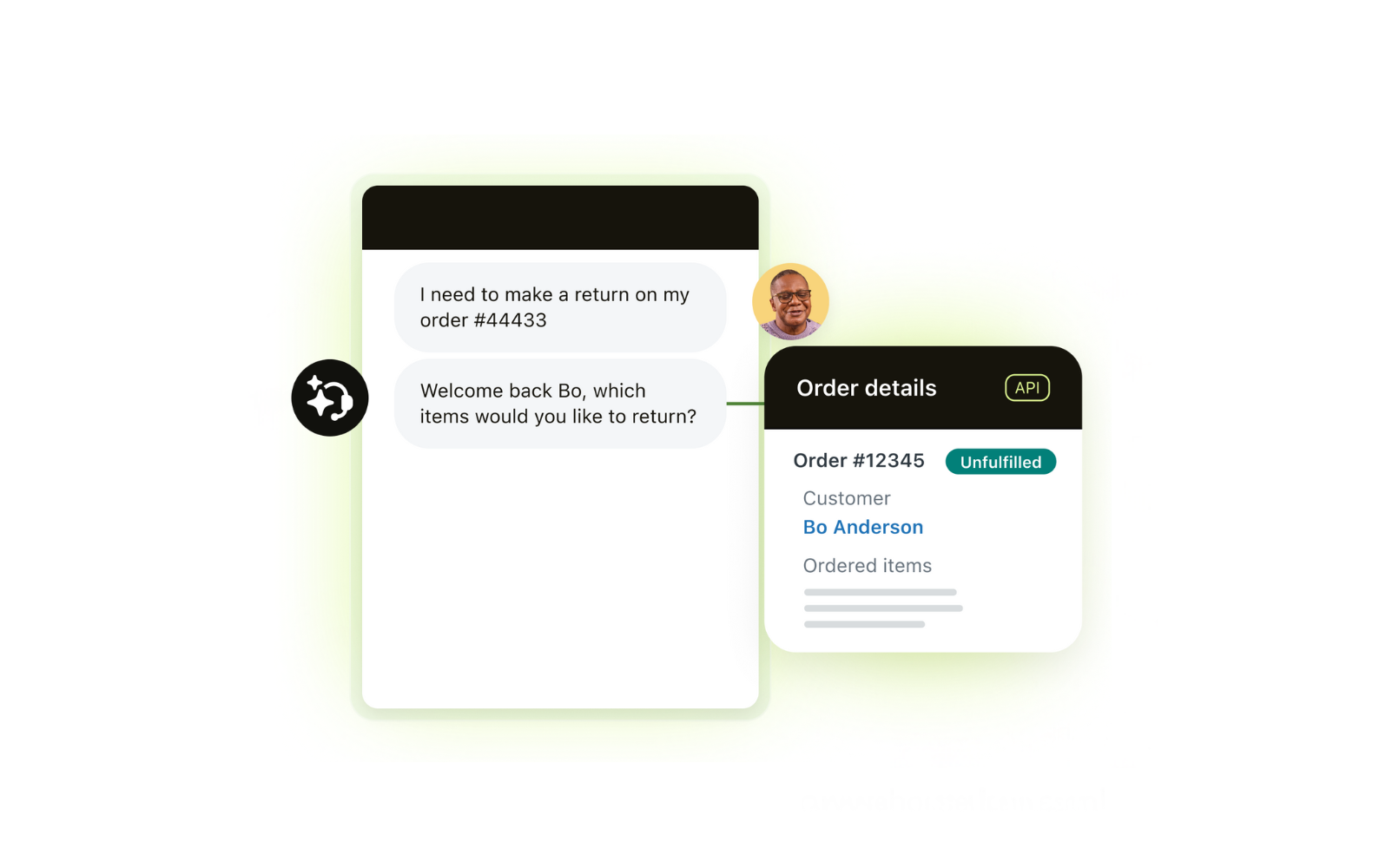
See the future of customer service with Zendesk’s AI agents.
Advanced AI and predictive intelligence
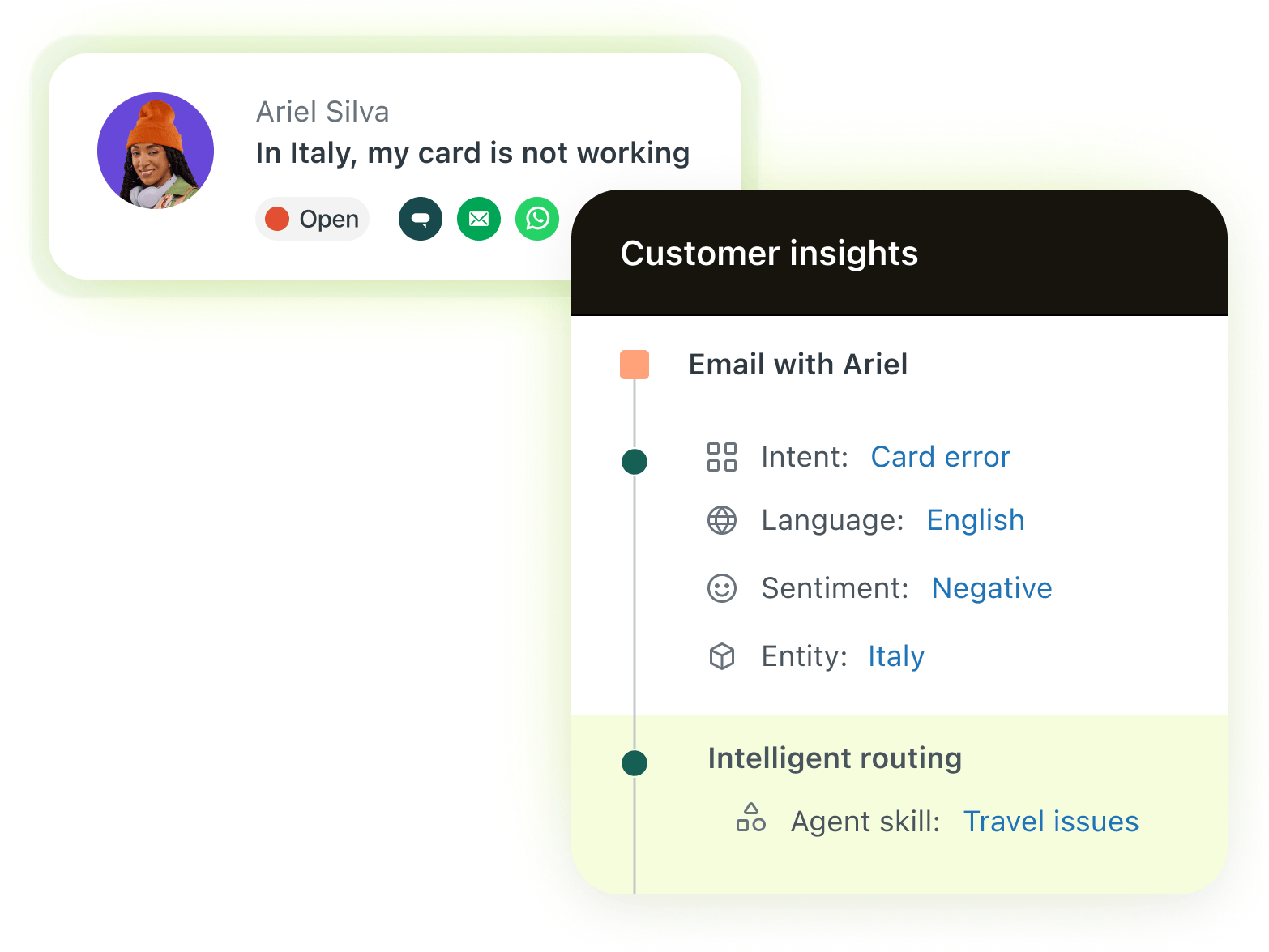
Meet your customer where they are with intelligent insights powered by Zendesk AI.
Zendesk's AI is built on a 18B+ interactions, offering out-of-the-box intent, sentiment, and language detection that requires zero manual training. Zendesk’s predictive intelligence also assists with automated triage and routing, ensuring tickets reach the right specialist instantly based on the customer's actual intent.
In contrast, Freshdesk’s Freddy AI is often criticized by G2 reviewers for being immature and lighter in depth, frequently requiring more manual setup. The session-based pricing model can also lead to unpredictable costs.
Unified omnichannel workspace
Zendesk delivers a genuinely unified agent workspace where every channel (voice, chat, email, social, and messaging) is natively integrated and fully connected. Zendesk can handle high-volume social messaging (WhatsApp, Instagram, etc.) alongside traditional email with ease.
Freshdesk's multichannel platform can feel disjointed with reviewers citing inconsistent experiences across channels that create friction for both agents and customers.
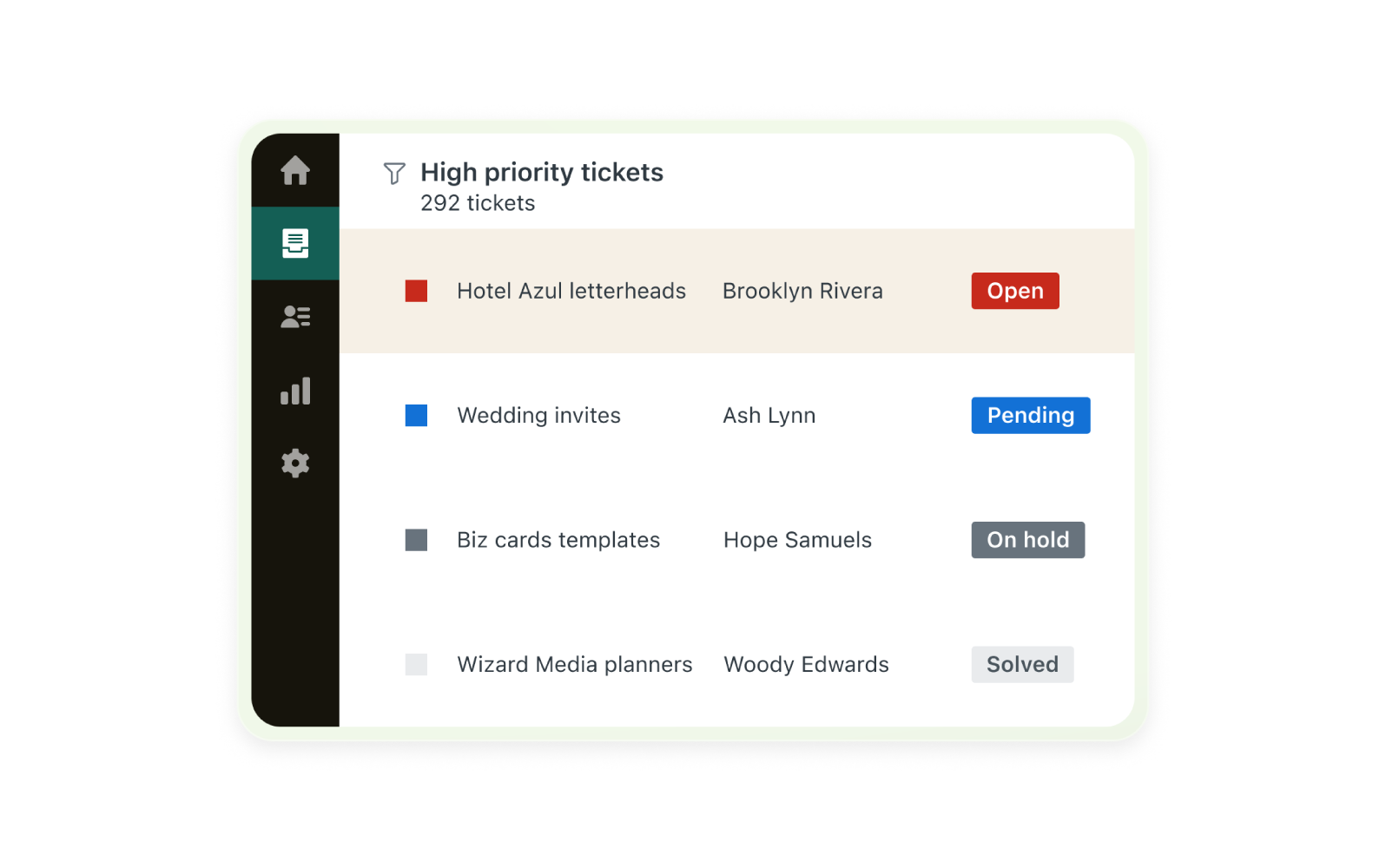
Learn more about the Zendesk Agent Workspace.
Comprehensive reporting and analytics
Learn more about robust reporting and analytics from Zendesk.
Zendesk Analytics empowers teams to make high-stakes decisions through deep insights into customer intent, sentiment, and automated resolution ROI. Additionally, Zendesk comes with advanced AI-powered reporting and custom dashboards to transform raw metrics into actionable improvements, ensuring leaders have a clear, unified view of their entire support ecosystem.
In contrast, Freshdesk’s reporting remains largely inflexible and siloed. This locked-in structure makes it difficult for teams to surface the custom insights they need, often leading to frustration over rigid customization and limited export options.
Robust ecosystem
With over 2,000 integrations and the powerful Zendesk Resolution Platform, Zendesk offers unmatched flexibility for businesses that need to connect their help desk with a CRM, ERP, or custom tools.
Freshdesk’s marketplace is significantly smaller and with a more rigid architecture, often limiting a developer's ability to build truly bespoke customer experiences. Organizations using Zendesk can treat their support platform as a flexible data hub rather than just a ticketing tool.
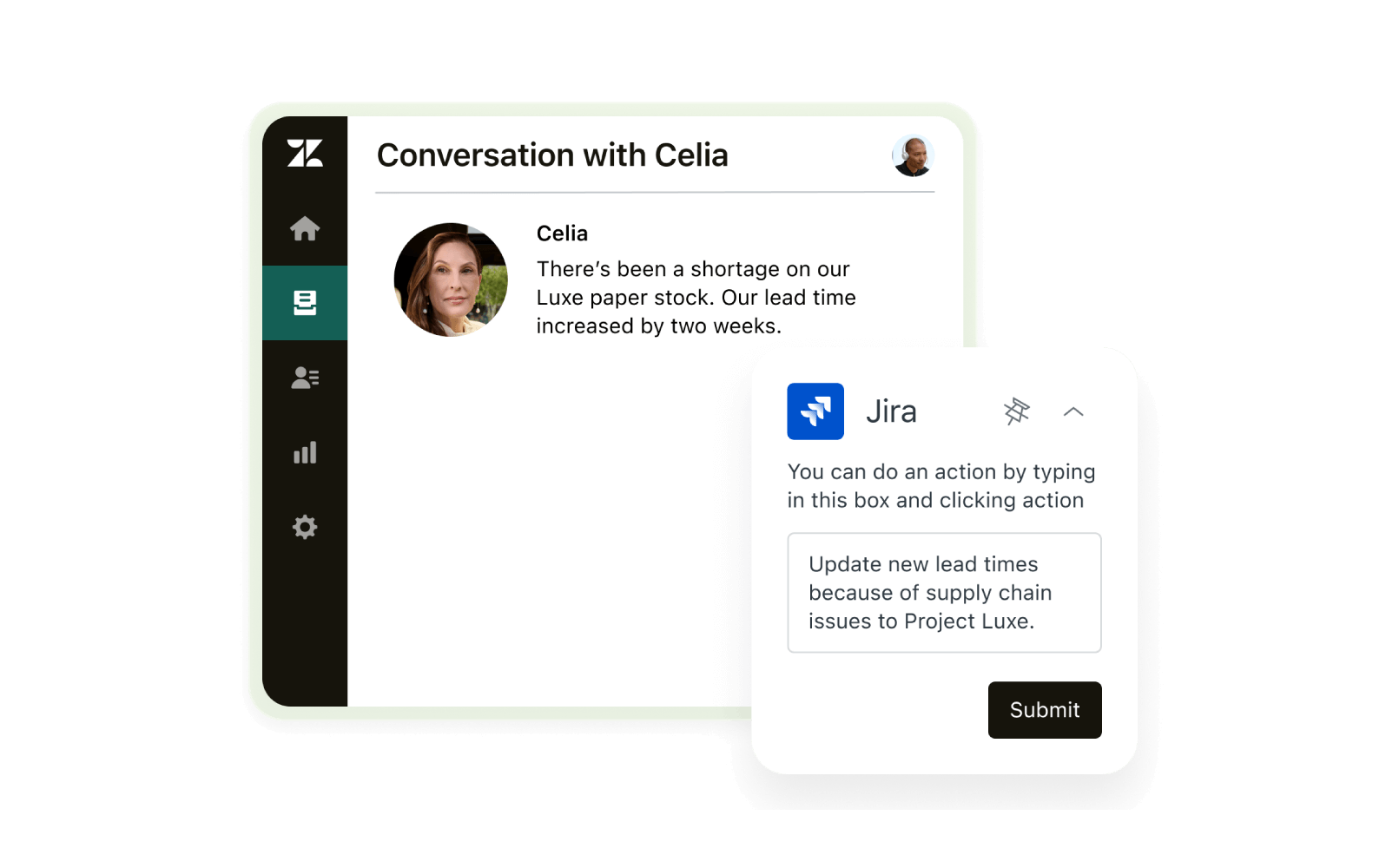
Explore our plug-and-play integrations in the Zendesk Marketplace.
Zendesk vs. Freshdesk pricing
|
Zendesk |
Freshdesk |
|
|
|
*Plans are billed annually. |
Freshdesk customers are moving to Zendesk, and here’s why
Organizations that do their research eventually come to the same conclusion: Zendesk is the clear choice for service leaders who need a reliable support platform. Many have already made the switch from Freshdesk to Zendesk, and their success speaks for itself.
Don't just take our word for it: Hear Zendesk reviews from brands that made the switch.
Wyze Labs
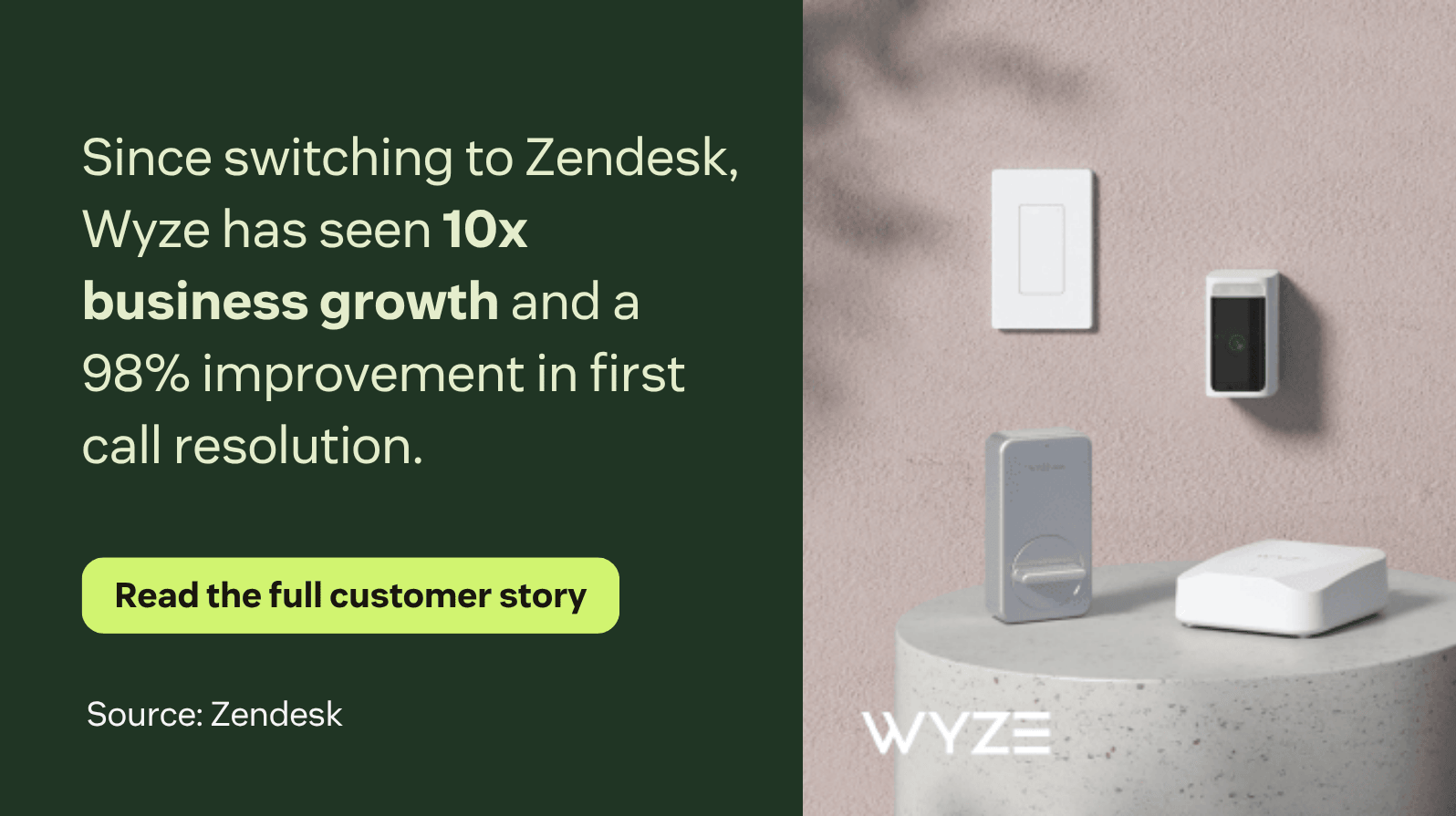
“For a company that really strives to have a high response rate within minutes, not being able to see customer replies quickly was always a struggle using Freshdesk.”
—Chuck Courtney, support manager at Wyze
Showpo
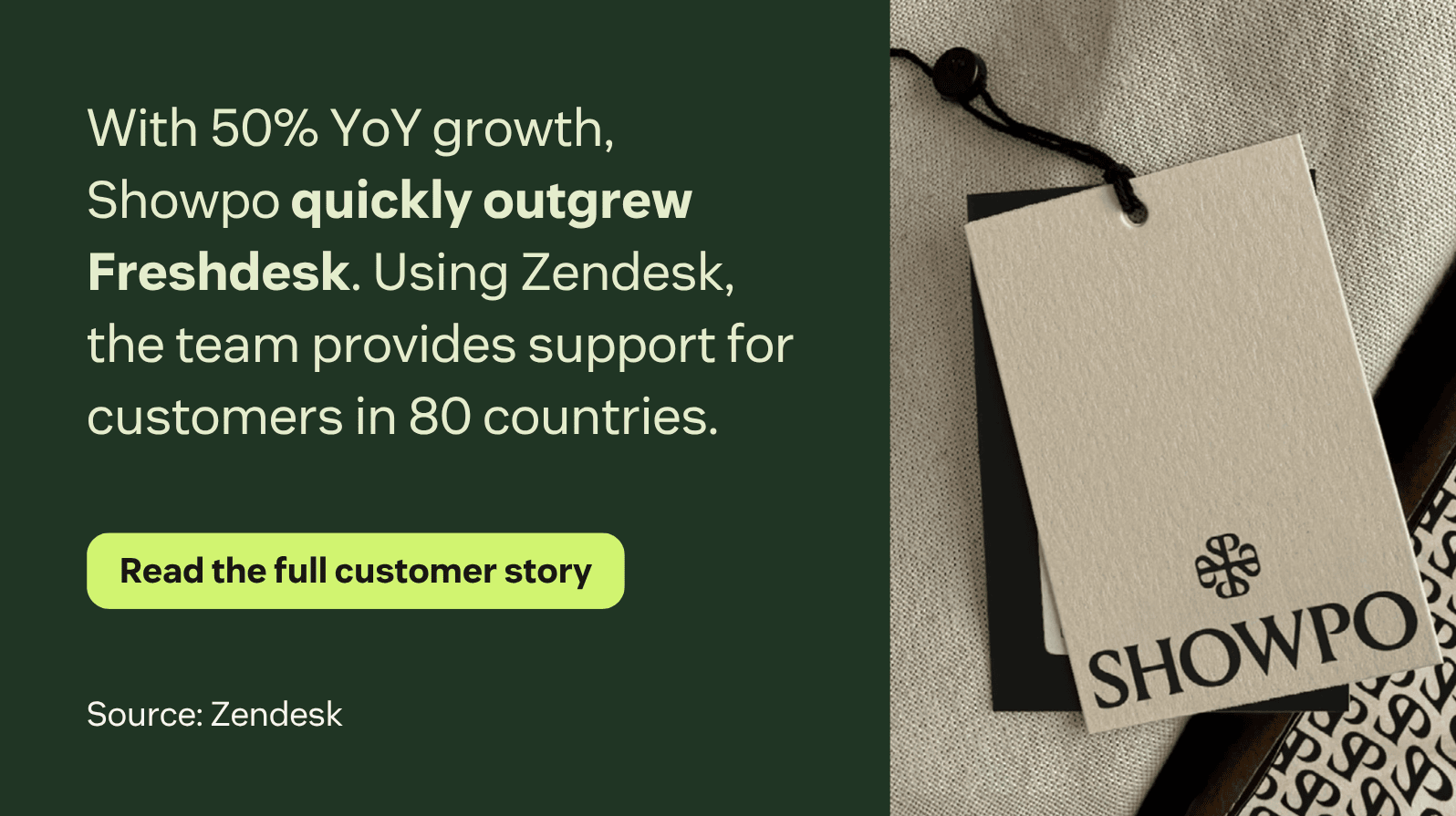
“When we were on Freshdesk, an agent would have eight, nine, 10 different tabs open—DHL, Australia Post, Magento, all these different tabs.”
—Paul Waddy, head of operations at Showpo
HeliosX
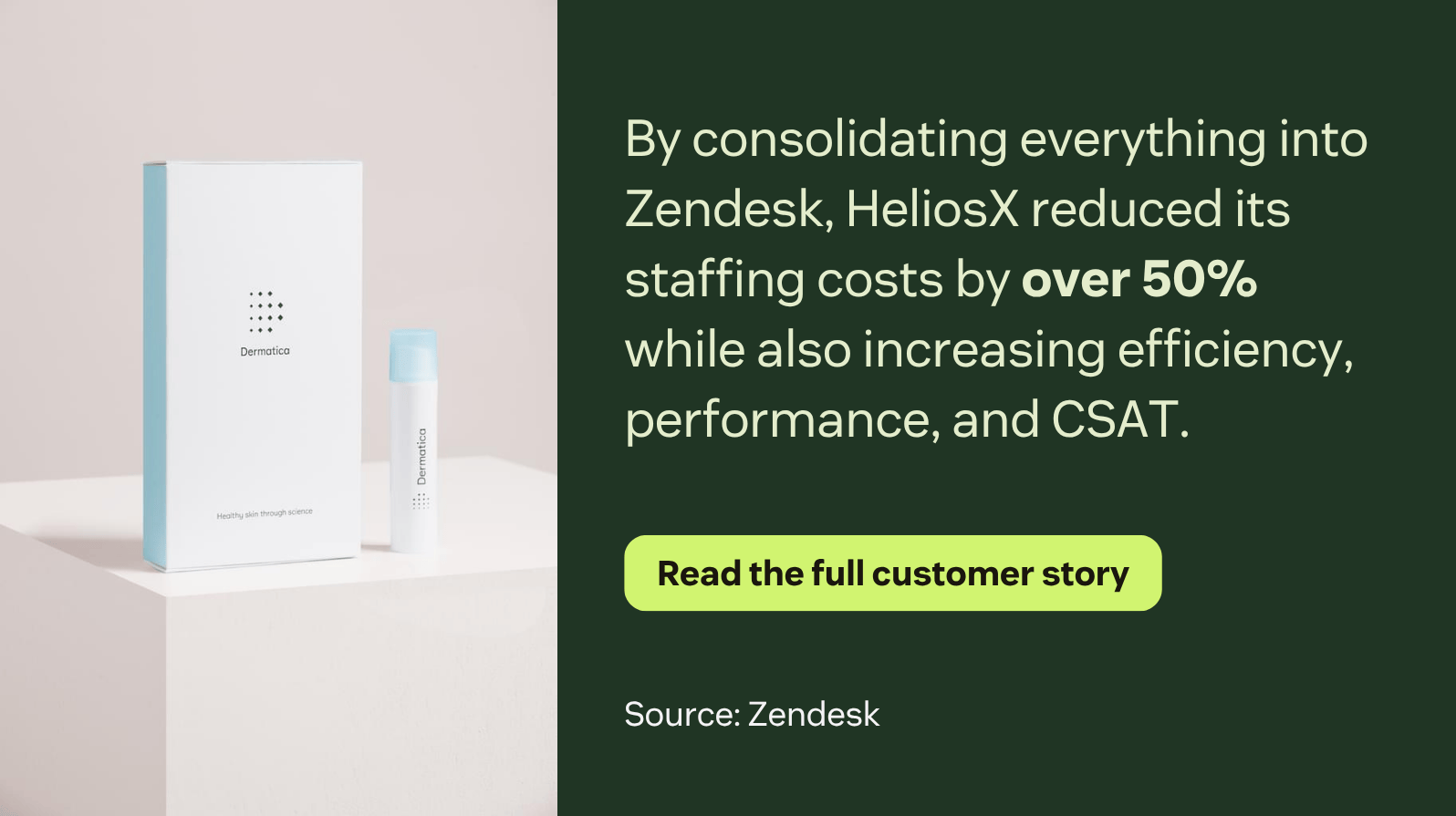
“The way we could just create flows and automations was so much easier than it would have been through Freshdesk… I wanted to get the system up and running quickly, and Zendesk was the better tool for being able to make changes at speed. We completed the migration, including setting up automations, triggers, macros, multiple views, and adding content to the help center in about three weeks.”
—Fabrice Dowling, global head of customer care at HeliosX
Frequently asked questions
Zendesk helps teams win
Companies that need to reliably meet growth demands and solve deep support complexity choose Zendesk. Freshdesk positions itself as ‘uncomplicated’, but the reality of hidden costs and product gaps quickly surfaces when teams want to move beyond the basics.
Enterprise-grade security, unified omnichannel experiences, and intelligent AI automation makes Zendesk the clear winner for organizations building exceptional customer experiences. If your support operation runs smarter, moves faster, and feels more personalized, you're definitely using Zendesk.
Zendesk vs. the rest: Compare the software
Learn more about Zendesk and how it stacks up against the competition.
Related posts

AI in customer service: All you need to know
Leverage AI in customer service to increase efficiency, reduce operational costs, and provide fast and personalized support at scale.

4 ways Zendesk can make your life easier ASAP
Keeping up with customer expectations is vital to your business — and that means your support operations need to be nimble. Here are four ways Zendesk can help you deliver great customer service (and make your life easier).

3 hidden costs of Freshdesk: Why low license fees can be deceptive
Freshdesk says you’re saving money on their low license costs, but there are big trade offs to consider.

Five signs it’s time to switch from Freshdesk to Zendesk
Are you offering the best customer experience? See why you should choose Zendesk for delivering high-quality CX consistently.